


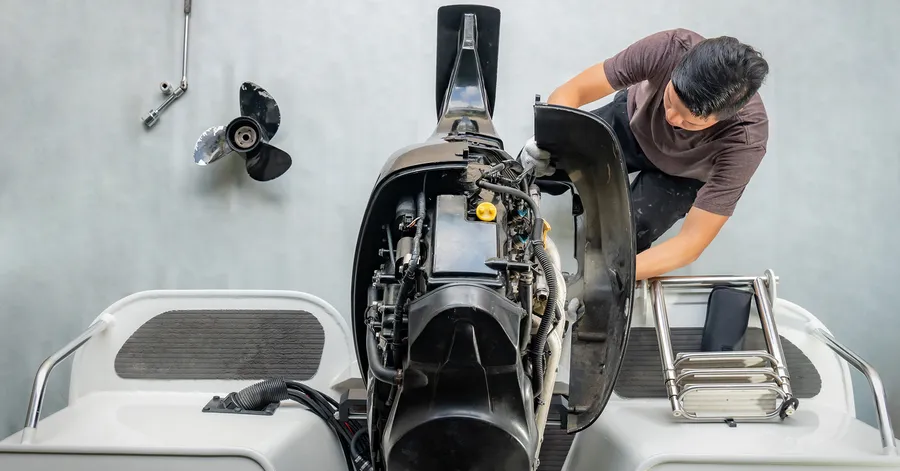
Heading out onto the water is the perfect way to spend a summer weekend, but June and July bring serious crowds and intense Texas heat. By the time mid-summer arrives, your boat has probably logged quite a few hours towing tubers, cruising the lake, or idling through busy channels. All that action means minor wear and tear can start to catch up with your vessel. Catching a small issue now—like a worn water pump, a loose battery cable, or a nicked propeller—is the best way to prevent a frustrating breakdown during a major summer holiday.
Taking a little time for a quick mid-season checkup ensures your boat runs smoothly, your family stays safe, and your summer plans stay right on track.
1. Mid-Season Cooling Systems and Propeller Inspections
Continuous high-speed cruising or idling through shallow bays can accelerate the wear rates of internal engine parts and water pumps.
- Keep an Eye on Temperature Gauges: While cruising across Lake Conroe, Beaumont river channels, or Clear Lake, check your dashboard metrics. Any small rise in running temperatures—even if it doesn't trigger a warning chime—tells you that your rubber water pump impeller is starting to wear out, or that silt is building up in the cooling tracks.
- Inspect Your Propeller Blades: Run your fingers along the edges of your prop blades to check for fine dings, bends, or curls. Even a tiny nick disrupts the rotational balance of your propeller, creating a subtle vibration that can destroy your lower-unit bearings and gears over time.
2. Battery Bank Health and Steering Lines
Floating in a quiet cove with the engine off while running a premium stereo, extra lighting, and wake pumps puts an intense load on your boat’s batteries, especially under a hot sun.
- Test Your Real Battery Capacity: Don't just trust a simple dashboard voltage reading. Have your starting and house batteries properly load-tested to make sure they can handle heavy accessory draws. Clean away any crusty corrosion from the terminals and ensure all connections are wrench-tightened firmly.
- Smooth Out Your Controls: Turn your steering wheel completely from left to right while the boat is stationary. Stiff, sticky, or jerky steering usually means old grease has hardened or micro-leaks have introduced air pockets into your hydraulic lines, creating a direct safety hazard when navigating close quarters.
3. Automated Bilge Pumps and Trailer Maintenance
Your boat's safety pumping systems and trailer infrastructure must remain in top condition to keep your highway transits and lake days completely worry-free.
- Test Onboard Accessory Pumps: Manually drop a little clean water into your bilge sump area to ensure your automatic float switch clicks on instantly. If you run a specialized wake or surf boat, test your ballast pump manifolds to check for priming delays or blown fuses.
- Give Your Trailer Hubs a Quick Check: Long highway trips under hot summer asphalt temperatures multiply the internal pressure of your trailer tires and hubs. Look for grease splattering on the inside of the wheel rims, which indicates a failed seal. Keep your bearing protectors filled with fresh, water-resistant marine grease to avoid a dangerous bearing lock-up on the highway.
Frequently Asked Questions
What is the legal speed restriction for operating a watercraft after dark in Texas waters? While open public reservoirs do not feature posted speed limits during peak daylight windows, Texas maritime law enforces a strict 25 MPH speed limit at night (defined from 30 minutes after sunset to 30 minutes before sunrise). This regulation is vital because ambient shoreline lights easily blend with structural vessel lighting after dark, making it exceptionally difficult to judge tracking velocities, closing distances, and floating hazards.
Why is running the engine bilge blower mandatory before launching or starting an inboard vessel? Fuel vapors are heavier than atmospheric air and will naturally settle into the lowest quadrants of a sealed engine compartment or bilge space. Texas maritime regulations mandate running your engine bilge blowers for a minimum of four continuous minutes prior to starting the engine or turning on electrical systems. This process evacuates any trapped combustible vapors out of the hull, eliminating the risk of a catastrophic static spark explosion inside the engine bay.
Sourcing Authorized Marine Assets & Technical Upkeep
Safeguarding your vessel through variable seasonal conditions requires outfitting your platform with components and mechanical structures calibrated to exact manufacturer tolerances.
- Comprehensive New and Pre-Owned Showrooms: To evaluate rough-water hull geometries, test luxury trim lines, or compare the tracking profiles of elite regional brands, explore our complete regional inventories of New Boats and strictly certified Used Boats.
- Advanced Transom Repower Operations: If your existing power plant exhibits low-end throttle lag or lacks modern digital networks near the courtesy docks, outfitting your transom through our specialized Repower Mercury or Repower Yamaha hubs installs advanced control systems for absolute handling precision.
- Certified Multi-Point Systems Maintenance: From testing low-voltage battery capacities under load to replacing raw-water pump impellers or diagnosing hydraulic steering binding, trust our factory-trained technicians at the Texas Marine Service Center department for detailed cosmetic detailing and preventative mechanical checks. For do-it-yourself maintenance, our Parts Center supplies factory-direct filters, UV protectants, premium vinyl cleaners, and marine accessories.
Fleet Allocation and Financial Coordination
What structural consumer credit frameworks exist for premium vessel procurement? Our internal Financing office constructs customized consumer portfolios, allowing buyers to seamlessly bundle their high-performance hull selection, reliable outboards, technical navigation electronics, and comprehensive Marine Insurance protections into a single structured loan.
Can I leverage my current boat's equity to transition to a modern rough-water platform? Yes. We facilitate transparent, market-accurate asset evaluations to eliminate personal listing delays. To liquidate your old hull and apply its equity directly toward an upgrade, submit your vessel's technical specifications to our Sell / Trade department.
How do I track upcoming dealer events or connect with Texas Marine? To learn about our 45-year legacy serving Southeast Texas mariners, visit our About Us page. You can monitor our active schedule of safe-boating seminars, captain safety workshops, and regional boat shows on our Events page, track continuous technical maintenance guides on our Blog section, see verified customer feedback on our Reviews directory, or connect directly with our specialized team members via our Staff index. To review extended service coverages, check our Extended Service Contracts checklist, and find current promotions on our Specials page. Experience these performance traits firsthand and evaluate various configurations across real-world water conditions by planning your attendance around our scheduled dealer gatherings on our primary active hub.