


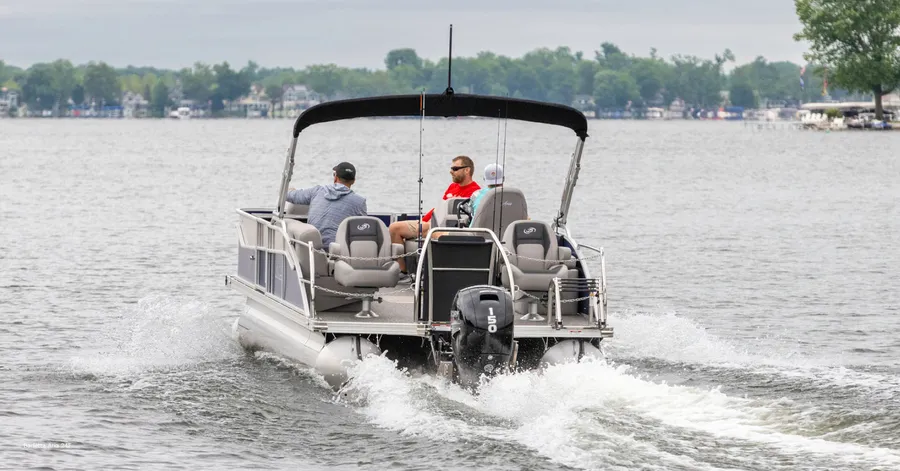
Evaluating a premium watercraft across Southeast Texas's distinct regional waterways—whether preparing to launch into the high-density holiday channels of Lake Conroe, navigating the river networks of Beaumont, or charting complex tidal runs out of Clear Lake—demands strict operational competence and an absolute commitment to predictable piloting. Unlike a controlled roadway grid, an open water column presents no structural lanes, fixed physical barriers, or universal lane constraints. In these regional environments, safety and collision avoidance are achieved solely through deliberate adherence to established maritime rules, defensive speeds, and standardized right-of-way tracking profiles.
Improvising navigation choices based on casual assumptions introduces severe operational risk. Implementing structured, predictable handling habits ensures you maintain control of the vessel's trajectory while giving surrounding traffic the visual data needed to coordinate clear passage.
1. Unified Lateral System and Shallow Water Piloting
Navigating localized inland bays and reservoir channels requires an accurate interpretation of federal marker networks. Misidentifying navigational aids can lead to sudden groundings, running gear destruction, or severe hull impacts against submerged hazards.
- The Intercoastal Red-Right-Returning Mandate: When tracking inbound from open Gulf waters or moving upstream along a river channel toward terminal basins, always keep red, even-numbered conical buoys (nuns) on your starboard (right) side, while maintaining green, odd-numbered square markers (cans) on your port (left) beam. This geometric alignment preserves your tracking vector inside verified deep-water corridors.
- Shallow Water Mitigation Stratagems: If your marine depth-sounder displays a rapidly dropping water column or if you approach unfamiliar coastal flats, instantly pull your throttle back to idle speed. Never attempt to blindly trace the wake profile of a leading vessel—variations in hull configurations, draft requirements, and specialized running equipment (such as a Dargel's integrated tunnel hull compared to a traditional deep-Vee) mean a line that is safe for one boat could instantly ground another.
- Isolate Specialized Non-Lateral Markers: Constantly scan the horizon for white cylindrical buoys displaying bright orange geometric shapes. Diamond emblems indicate isolated localized hazards such as submerged rock reefs, timber fields, or shoals, demanding immediate course corrections. Circles dictate regulatory speed restrictions, while diamonds containing cross-bars indicate areas entirely closed to vessel tracking.
2. Physical Hydrodynamics of a True No-Wake Profile
Operating a multi-ton hull inside crowded marina perimeters, staging coves, or terminal docking channels requires an understanding of displacement physics and low-velocity control.
- Deconstruct the Speed-to-Wake Equation: A true "No-Wake" zone is not defined by an arbitrary throttle position, but by the physical displacement profile of the hull. The vessel must move at the lowest possible velocity required to maintain forward steerage without plowing water or generating a rolling displacement wave. If your stern is sagging and pushing a rolling swell that rocks floating bulkheads, you are operating in direct violation of the safety zone.
- Execute Proactive Throttle Reductions: Transition the gear binnacle down to forward idle well before crossing the boundary perimeter of a regulatory zone. Entering a congested marina channel at high speeds and dragging your throttle back late forces a massive wall of displacement water to surge forward into the slips, endangering crews attempting to secure lines.
3. Statutory Right-of-Way Priority Hierarchies
When two vessels establish intersecting paths that create a risk of collision, maritime law removes all guesswork by defining clear roles for the Stand-on vessel and the Give-way craft.
- Overtaking Sector Constraints: Any vessel approaching another from an angle more than 22.5 degrees abaft her beam is legally classified as the overtaking craft. The overtaking vessel is explicitly designated as the Give-way boat and must alter her heading decisively to pass safely, while the vessel being overtaken must maintain a completely stable, predictable line and speed.
- Head-on Engagement Protocols: When two power-driven vessels approach each other head-on or nearly head-on, neither vessel holds Stand-on status. Both captains must adjust their helms to starboard, executing a safe port-to-port pass that ensures ample lateral separation.
- Towing Path Isolation Rules: Never attempt to cut across the immediate wake space directly behind a specialized tow boat. A wakeboard or surf platform requires a massive tether line extending up to 80 feet astern; crossing this operational zone risks wrapping the high-tensile tow line into your spinning propeller or causing a catastrophic impact with a rider.
4. Marine Courtesy and Spatial Etiquette Staging
Maintaining high operational courtesy across high-density lakes and coastal channels prevents situational escalation and keeps passengers safe.
- Acoustic and Environmental Discipline: Keep helm entertainment systems set to local volumes when approaching packed boat ramps, courtesy docks, or shoreline anchorages. High decibel levels drown out vital verbal crew commands, automated engine warning alarms, and emergency horn signaling sequences.
- Minimize Rolling Wake Damage: When tracking past anchored vessels, stationary anglers, or low-freeboard paddlecraft, pass at a distance that allows your displacement wave to dissipate. Intentionally throwing clean rollers near exposed kayakers or smaller fishing skiffs can swamp their cockpits and compromise your liability profile.
- Execute Decisive Passing Vectors: When overtaking another watercraft in open channels, perform the maneuver cleanly and efficiently. Lingering closely alongside another captain's beam traps both hulls within mutual hydrodynamic pressure fields, which can pull the vessels together or disrupt steering precision.
Technical Frequently Asked Questions
What is the legal speed restriction for operating a watercraft after dark in Texas waters? While open public reservoirs do not feature posted speed limits during peak daylight windows, Texas maritime law enforces a strict 25 MPH speed limit at night (defined from 30 minutes after sunset to 30 minutes before sunrise). This regulation is vital because ambient shoreline lights easily blend with structural vessel lighting after dark, making it exceptionally difficult to judge tracking velocities, closing distances, and floating hazards.
Why is running the engine bilge blower mandatory before launching or starting an inboard vessel? Fuel vapors are heavier than atmospheric air and will naturally settle into the lowest quadrants of a sealed engine compartment or bilge space. Texas maritime regulations mandate running your engine bilge blowers for a minimum of four continuous minutes prior to starting the engine or turning on electrical systems. This process evacuates any trapped combustible vapors out of the hull, eliminating the risk of a catastrophic static spark explosion inside the engine bay.
Sourcing Authorized Marine Assets & Technical Upkeep
Safeguarding your vessel through variable seasonal conditions requires outfitting your platform with components and mechanical structures calibrated to exact manufacturer tolerances.
- Comprehensive New and Pre-Owned Showrooms: To evaluate rough-water hull geometries, test luxury trim lines, or compare the tracking profiles of elite regional brands, explore our complete regional inventories of New Boats and strictly certified Used Boats.
- Advanced Transom Repower Operations: If your existing power plant exhibits low-end throttle lag or lacks modern digital networks near the courtesy docks, outfitting your transom through our specialized Repower Mercury or Repower Yamaha hubs installs advanced control systems for absolute handling precision.
- Certified Multi-Point Systems Maintenance: From testing low-voltage battery capacities under load to replacing raw-water pump impellers or diagnosing hydraulic steering binding, trust our factory-trained technicians at the Texas Marine Service Center department. For do-it-yourself maintenance, our Parts Center supplies factory-direct filters, zinc anodes, and marine accessories.
Fleet Allocation and Financial Coordination
What structural consumer credit frameworks exist for premium vessel procurement? Our internal Financing office constructs customized consumer portfolios, allowing buyers to seamlessly bundle their high-performance hull selection, reliable outboards, technical navigation electronics, and comprehensive Marine Insurance protections into a single structured loan.
Can I leverage my current boat's equity to transition to a modern rough-water platform? Yes. We facilitate transparent, market-accurate asset evaluations to eliminate personal listing delays. To liquidate your old hull and apply its equity directly toward an upgrade, submit your vessel's technical specifications to our Sell / Trade department.
How do I track upcoming dealer events or connect with Texas Marine? To learn about our 45-year legacy serving Southeast Texas mariners, visit our About Us page. You can monitor our active schedule of safe-boating seminars, captain safety workshops, and regional boat shows on our Events page, track continuous technical maintenance guides on our Blog section, see verified customer feedback on our Reviews directory, or connect directly with our specialized team members via our Staff index. To review extended service coverages, check our Extended Service Contracts checklist, and find current promotions on our Specials page. Experience these traits firsthand and evaluate various configurations across real-world water conditions by planning your attendance around our scheduled Demo Day events.