



Evaluating high-performance watersports activities across Southeast Texas's distinct regional waterways - whether tracking through the river channels of Beaumont, cruising the coastal bay networks of Clear Lake, or staging specialized tow sets on the high-density columns of Lake Conroe - requires matching your choice to strict mechanical configurations, athlete physical profiles, and real-world hull dynamics. Transitioning into the tow-sports sector demands moving past basic aesthetic choices and analyzing how different watercraft architectures generate dynamic tow vectors and wake geometries.
Both wakeboarding and wakesurfing offer distinct athletic progression loops, but they introduce entirely contradictory demands on the propulsion platform, line rigging, and safety boundaries.
1. Mechanical Configurations and Towing Hydrodynamics
The foundational divergence between wakeboarding and wakesurfing begins with the velocity profiles, line lengths, and hull ballast distributions required to shape a functional running surface.
- Wakeboarding Velocity and Tension Dynamics: Wakeboarding operates at a high-velocity, high-tension operational profile, running between 19 and 23 MPH with a long, non-stretch braided line extending 65 to 75 feet astern. The towing craft distributes ballast evenly from bow to stern to crisp up twin clean, firm wake lips. This geometric arrangement allows riders to leverage high-speed approach angles to launch off the wake, translating vertical energy into advanced aerial maneuvers, spins, and flips.
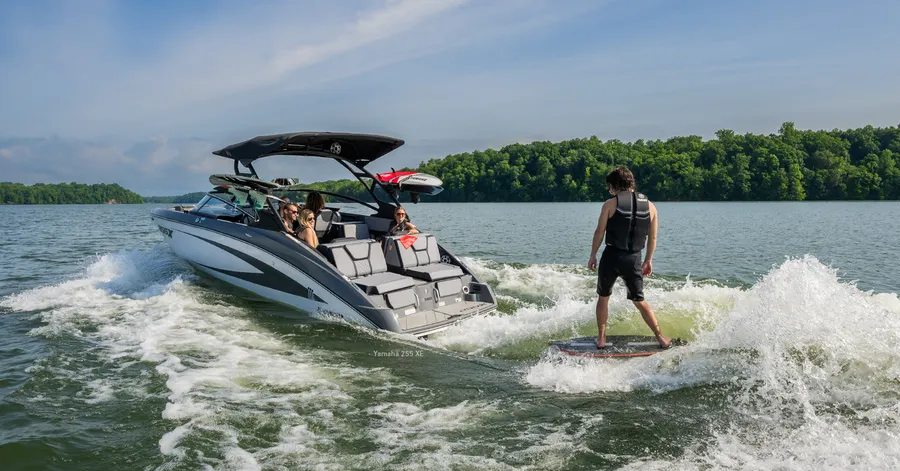
- Wakesurfing Displacement and Wave Formations: Wakesurfing replaces high-speed tension with localized, low-velocity displacement, tracking strictly between 10 and 12 MPH with a short, thick leader rope used purely for initial positioning. The vessel utilizes heavy stern-oriented internal ballast tanks, specialized running surfaces, and integrated wake-shaping tabs to deliberately sink one side of the transom. This massive displacement generates a continuous, curling pocket wave that provides the forward hydrodynamic push required for rope-free surfing.
2. Physical Biometrics and Progression Staging
The learning curve and physical impact profiles of each discipline dictate which activity matches your crew’s cross-training background and athletic tolerance.
- The Structural Rigidity of Wakeboard Bindings: Wakeboarding utilizes fixed, rigid boot bindings that lock the rider's feet squarely to the board's top sheet. This secure connection ensures absolute edge control during high-velocity carving transitions, but it forces the rider to absorb the full momentum of a crash. Early progression loops involve higher-impact, high-velocity tumbling falls that demand strong physical core tracking.
- The Fluid Freedom of Wakesurf Staging: Wakesurfing relies on a strapless, non-binding traction pad surface that mimics traditional ocean surfing or skateboarding. Falls occur at a fraction of the velocity of wakeboarding, resulting in low-impact water entries. This approachable learning curve allows beginners to quickly master the fundamentals of weight distribution, transitions, and pocket placement without excessive physical exhaustion, making it highly attractive for multi-generational family sets.
3. Essential Marine Gear and Ballast Asset Requirements
Operating safe, high-performance tow sessions requires specialized equipment calibrated to the specific performance profile of the sport.
- Task-Specific Floating Assets: Standard auxiliary life jackets are entirely inadequate for tow-sports workloads. Crews must transition to high-impact, USCG-approved Type III professional sports vests featuring close-quarters geometric foam panels that wrap tightly to the torso. This design ensures absolute flotation during high-velocity impacts while preserving full rotational shoulder flexibility.
- Propulsion Safety Constraints: Wakesurfing introduces strict propulsion-system boundaries. It is physically impossible and legally hazardous to attempt a wakesurf set behind a traditional sterndrive (I/O) or outboard configuration, as the exposed spinning propeller sits directly below the swim platform where the surfer operates. Wakesurfing mandates a specialized inboard V-drive or forward-facing propulsion system where the running gear is safely tucked entirely beneath the fiberglass hull shell.
4. Lake Conroe Meteorological Timing Strategies
Staging tow-sports runs on Lake Conroe demands proactive routing plans to avoid severe wind gradients and heavy holiday traffic loops.
- Calibrate Your Launch Windows: The high density of open-water cruisers and large luxury dayboats on Lake Conroe means that afternoon water columns quickly degrade into chaotic, cross-cutting displacement waves and choppy rollers. Beginners should schedule operations strictly during early morning windows—ideally from 30 minutes after sunrise to 10:00 AM—to capitalize on cold, glassy water columns that maximize tracking precision and accelerate rider confidence.
Technical Frequently Asked Questions
What is the legal speed restriction for operating a watercraft after dark in Texas waters? While open public reservoirs do not feature posted speed limits during peak daylight windows, Texas maritime law enforces a strict 25 MPH speed limit at night (defined from 30 minutes after sunset to 30 minutes before sunrise). This regulation is vital because ambient shoreline lights easily blend with structural vessel lighting after dark, making it exceptionally difficult to judge tracking velocities, closing distances, and floating hazards.
Why is running the engine bilge blower mandatory before launching or starting an inboard vessel? Fuel vapors are heavier than atmospheric air and will naturally settle into the lowest quadrants of a sealed engine compartment or bilge space. Texas maritime regulations mandate running your engine bilge blowers for a minimum of four continuous minutes prior to starting the engine or turning on electrical systems. This process evacuates any trapped combustible vapors out of the hull, eliminating the risk of a catastrophic static spark explosion inside the engine bay.
Sourcing Authorized Marine Assets & Technical Upkeep
Safeguarding your vessel through variable seasonal conditions requires outfitting your platform with components and mechanical structures calibrated to exact manufacturer tolerances.
- Comprehensive New and Pre-Owned Showrooms: To evaluate rough-water hull geometries, test luxury trim lines, or compare the tracking profiles of elite regional brands, explore our complete regional inventories of New Boats and strictly certified Used Boats.
- Advanced Transom Repower Operations: If your existing power plant exhibits low-end throttle lag or lacks modern digital networks near the courtesy docks, outfitting your transom through our specialized Repower Mercury or Repower Yamaha hubs installs advanced control systems for absolute handling precision.
- Certified Multi-Point Systems Maintenance: From testing low-voltage battery capacities under load to replacing raw-water pump impellers or diagnosing hydraulic steering binding, trust our factory-trained technicians at the Texas Marine Service Center department. For do-it-yourself maintenance, our Parts Center supplies factory-direct filters, zinc anodes, and marine accessories.
Fleet Allocation and Financial Coordination
What structural consumer credit frameworks exist for premium vessel procurement? Our internal Financing office constructs customized consumer portfolios, allowing buyers to seamlessly bundle their high-performance hull selection, reliable outboards, technical navigation electronics, and comprehensive Marine Insurance protections into a single structured loan.
Can I leverage my current boat's equity to transition to a modern rough-water platform? Yes. We facilitate transparent, market-accurate asset evaluations to eliminate personal listing delays. To liquidate your old hull and apply its equity directly toward an upgrade, submit your vessel's technical specifications to our Sell / Trade department.
How do I track upcoming dealer events or connect with Texas Marine? To learn about our 45-year legacy serving Southeast Texas mariners, visit our About Us page. You can monitor our active schedule of safe-boating seminars, captain safety workshops, and regional boat shows on our Events page, track continuous technical maintenance guides on our Blog section, see verified customer feedback on our Reviews directory, or connect directly with our specialized team members via our Staff index. To review extended service coverages, check our Extended Service Contracts checklist, and find current promotions on our Specials page. Experience these performance traits firsthand and evaluate various configurations across real-world water conditions by planning your attendance around our scheduled Demo Day events.