


Transitioning from a prospective buyer to a confident captain requires moving past superficial showroom aesthetics and matching your purchase to strict operational profiles, regional hydrodynamics, and long-term asset commitments. Across Southeast Texas—whether navigating the crowded mid-day wake patterns of Lake Conroe, tracking shifting shallow river flats in Beaumont, or managing coastal tidal movements throughout Clearlake—the regional environment dictates your choice of hull design and propulsion.
By answering five objective, practical questions before submitting a financing application, you can bypass common buyer pitfalls and secure a platform that simplifies single-handed operations.
1. What Is the Primary Structural Mission Profile?
Attempting to procure a single watercraft that excels equally at hardcore coastal shallow fishing, high-velocity tournament wakeboarding, and large-scale multi-family entertainment represents an engineering impossibility.
- Hardcore Angling and Coastal Utilities: If your destination involves tracking redfish or trout through the ultra-skinny flats of the Gulf Coast bays, you require a low-profile tunnel hull with an exceptionally shallow draft—such as a Dargel Skout or Kat series—or a heavy-duty Robalo bay boat built to withstand rough nearshore chop.
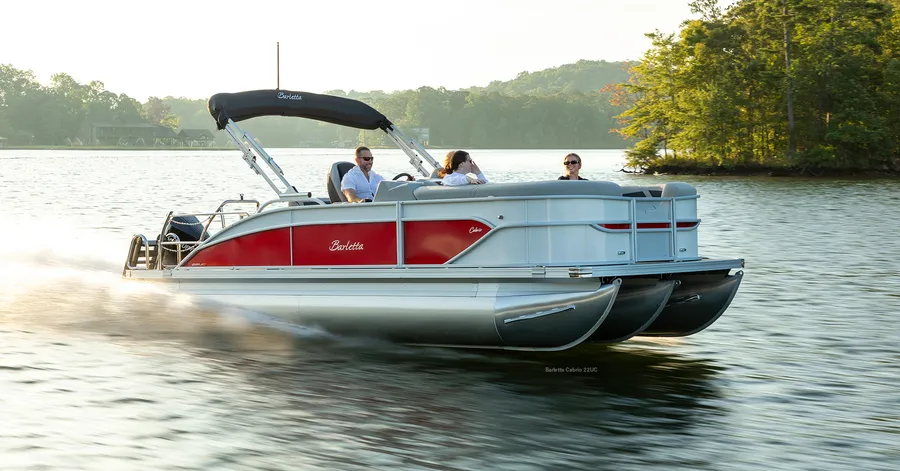
- Social Cruising and Day Entertainment: If the priority is family comfort, swimming, and stationary cove gatherings, high-displacement luxury platforms like Barletta pontoons optimize deck square footage, weight distribution, and lounge ergonomics.
- Watersports and Multi-Use Day Boating: For active families who mix day cruising with towing athletes on tubes or skis, a deep-Vee fiberglass sport boat like a Chaparral bowrider balances stability, responsive tracking, and smooth handling.
2. What Is the True Passenger Payload and Weight Distribution Field?
Showroom passenger capacities reflect maximum statutory limits under flat-water conditions, not optimal running attitudes when fully loaded with gear.
- Calculate Real-World Payload Metrics: Factor in the combined mass of your average guest manifest, fully packed rotomolded coolers, sports equipment, grounding tackle, and full fuel cells.
- Analyze Running Attitudes Under Load: If your payload forces passengers to crowd near the helm console or unevenly burden one beam, the hull will list, increasing hydrodynamic drag and reducing fuel efficiency. Pontoons and high-capacity deck boats offer linear stability across large manifests, whereas fiberglass sport boats require active payload management to preserve helm visibility and crisp banking transitions.
3. Which Hydrodynamic Environment Governs the Flight Path?
The physical characteristics of your primary body of water dictate the necessary hull dimensions, entry angles, and structural safety margins required to maintain defensive pilotage.
- Inland Reservoirs (e.g., Lake Conroe): High-density weekend traffic creates cross-cutting displacement wakes and tightly spaced head chop. A deep-Vee entry hull or a modern tritoon equipped with lifting strakes cuts smoothly through this turbulence, protecting passengers from severe hull slamming.
- Coastal Bays and Inlets (e.g., Clearlake/Seabrook): Marine environments subject the hull to sudden wind gradients, severe tidal shifts, and corrosive saltwater tracking. This demands high-purity fiberglass layups, self-bailing cockpits, and heavy-walled sacrificial zinc anodes to neutralize galvanic corrosion.
4. What Is the Reality of Single-Handed Close-Quarters Handling?
The true test of ownership satisfaction is whether a single adult can launch, operate, and recover the vessel smoothly without requiring an experienced crew to manage lines.
- Evaluate Low-Velocity Responsiveness: During a live technical demonstration, evaluate how predictably the hull responds to short, brief pulses of power. The mechanical or digital binnacle must slide cleanly into forward and reverse detents without play or shift lag.
- Master the Idle-and-Neutral Pulse Technique: When maneuvering near packed public docks, trailer bunks, or narrow slips under a heavy crosswind, eliminate the common error of applying sustained, high-RPM forward throttle. Approach terminal structures using brief, one-second clicks of gear paired with neutral coasting, allowing the boat's natural hydrodynamic drag to execute the braking work. If a tracking line becomes compromised by a sudden gust, immediately execute a controlled abort
5. What Is the Total Financial Lifecycle of the Asset?
The total financial commitment of vessel ownership extends far beyond the initial purchase price. A realistic seasonal budget must integrate fixed and variable operational costs from day one.
- Quantify Auxiliary Commitments: Account for comprehensive specialized marine insurance, secure slip leasing or dry-stack storage fees, local trailering registration, and calculated fuel burn loops.
- Preventative Upkeep Schedules: Allocate funds for mandatory mid-season service checks, annual fluid changes, structural trailer hub packing, and proactive raw-water pump impeller replacements. Replacing wear items early prevents automated engine guardian modes and avoids lost summer weekends.
- New vs. Pre-Owned Depreciations: Premium new watercraft provide the latest digital telemetry, full factory warranties, and modern low-emission propulsion platforms. Conversely, a certified pre-owned vessel minimizes initial capital depreciation, provided the hull and mechanical systems have undergone a rigorous, multi-point diagnostic inspection.
Technical Frequently Asked Questions
What is the statutory legal speed restriction for operating a watercraft after dark in Texas?
While open public reservoirs do not feature posted speed limits during peak daylight windows, Texas maritime law enforces a strict 25 MPH speed limit at night (defined from 30 minutes after sunset to 30 minutes before sunrise). This regulation is vital because ambient shoreline lights easily blend with structural vessel lighting after dark, making it exceptionally difficult to judge tracking velocities, closing distances, and floating hazards.
Why is running the engine bilge blower mandatory before launching or starting an inboard vessel?
Fuel vapors are heavier than atmospheric air and will naturally settle into the lowest quadrants of a sealed engine compartment or bilge space. Texas maritime regulations mandate running your engine bilge blowers for a minimum of four continuous minutes prior to starting the engine or turning on electrical systems. This process evacuates any trapped combustible vapors out of the hull, eliminating the risk of a static spark explosion inside the engine bay.
Sourcing Authorized Marine Assets & Technical Upkeep
Safeguarding your vessel through variable seasonal conditions requires outfitting your platform with components and mechanical structures calibrated to exact manufacturer tolerances.
- Comprehensive New and Pre-Owned Showrooms: To evaluate rough-water hull geometries, test luxury trim lines, or compare the tracking profiles of elite regional brands, explore our complete inventories of New Boats and strictly certified Used Boats.
- Advanced Transom Repower Operations: If your existing power plant exhibits low-end throttle lag or lacks modern digital networks near the courtesy docks, outfitting your transom through our specialized Repower Mercury or Repower Yamaha hubs installs advanced control systems for absolute handling precision.
- Certified Multi-Point Systems Maintenance: From testing low-voltage battery capacities under load to replacing raw-water pump impellers or diagnosing hydraulic steering binding, trust our factory-trained technicians at the Texas Marine Service Center department. For do-it-yourself maintenance, our Parts Center supplies factory-direct filters, zinc anodes, and marine accessories.
Fleet Allocation and Financial Coordination
What structural consumer credit frameworks exist for premium vessel procurement?
Our internal Financing office constructs customized consumer portfolios, allowing buyers to seamlessly bundle their high-performance hull selection, reliable outboards, technical navigation electronics, and comprehensive Marine Insurance protections into a single structured loan.
Can I leverage my current boat's equity to transition to a modern rough-water platform?
Yes. We facilitate transparent, market-accurate asset evaluations to eliminate personal listing delays. To liquidate your old hull and apply its equity directly toward an upgrade, submit your vessel's technical specifications to our Sell / Trade department.
How do I track upcoming dealer events or connect with Texas Marine?
To learn about our 45-year legacy serving Southeast Texas mariners, visit our About Us page. You can monitor our active schedule of safe-boating seminars, captain safety workshops, and regional boat shows on our Events page, track continuous technical maintenance guides on our Blog, see verified customer feedback on our Reviews directory, or connect directly with our specialized team members via our Staff index. To review extended service coverages, check our Extended Service Contracts checklist, and find current promotions on our Specials page.