


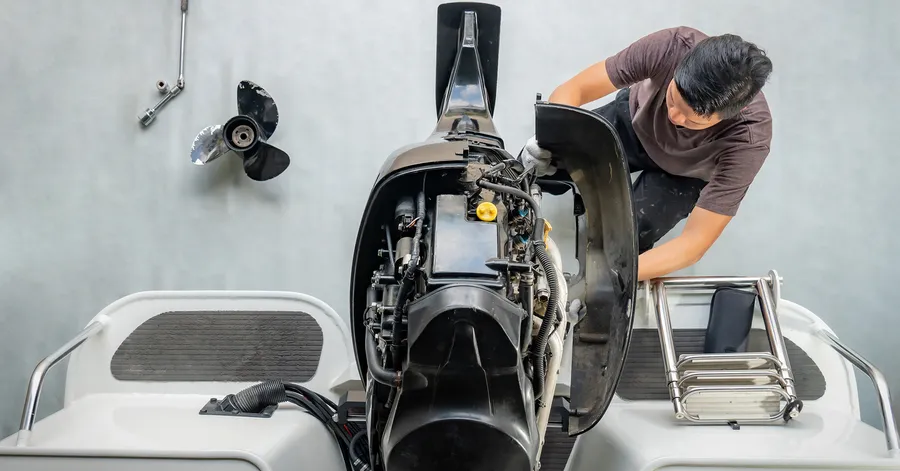
Evaluating a premium vessel across complex regional water systems—whether preparing to launch into the high-density holiday channels of Lake Conroe, navigating the river networks of Beaumont, or charting tidal runs out of Clear Lake—requires moving past basic cosmetic cleaning to focus on a strict technical validation of your vessel's mechanical, electrical, and structural systems. Components that appeared stable while stationary under zero load during storage can fail rapidly when subjected to dynamic vibration, thermal expansions, and continuous cyclic workloads.
Implementing a rigorous, multi-point spring breakout protocol is your primary line of defense against early-season breakdowns, automated engine guardian modes, and lost weekends on the water.
Foundational Walk-Around Structural Inspections
Before diving into sub-floor mechanics or electrical circuitry, your spring breakout must begin with a comprehensive, external walk-around audit of the hull, running gear, and structural fastenings. This baseline visual and physical evaluation isolates stress fractures and material degradation before the vessel ever touches a concrete launch lane.
- Gelcoat and Transom Stress Audits: Walk the entire perimeter of the hull sides, lifting strakes, and transom plates under high-intensity lighting. Scan meticulously for spiderweb hairline fractures, deep stress cracks, or localized fiberglass gouges that may have developed from structural shifts or minor impacts prior to layup. Pay close attention to the swim platform mounts and transom corners, where high engine torque concentrates stress. Remove all winter storage covers completely and inspect all deep cockpit crevices for pest nesting or debris accumulation.
- Running Gear and Hardware Alignment: Get beneath the hull to inspect the underwater gear. Manually check the rudder, tracking fins, and shaft struts for absolute structural rigidity—any physical play indicates failed internal bushings or loose mounting fasteners. Inspect the propeller shaft for subtle score lines, check that the cotter pins and propeller nuts are pinned tight to factory torque specifications, and ensure sacrificial zinc anodes have not experienced advanced galvanic erosion.
- Thru-Hull Fittings and Valve Actuation: Check every single thru-hull intake, discharge port, and scupper valve below and above the waterline. Clear away any nesting insects, dried mud, or marine debris blocking these ports. Manually cycle every internal seacock valve from fully open to completely closed to ensure the ball valves articulate smoothly and seal tight without binding or binding stress.
Critical Pre-Launch Systems Validation Matrix
1. Low-Voltage Electrical Integrity and Continuities
Extended storage periods naturally promote slow chemical self-discharge inside marine lead-acid or AGM battery banks, while high local humidity levels form thin resistance fields across exposed wiring points.
- Load Isolation Testing: Connect a carbon-pile load tester to every individual battery bank to verify actual cold cranking amps (CCA) under load. A battery that displays correct voltage at rest can still drop completely under the high-amperage draw of an engine starter.
- Terminal Re-Torque Drills: Inspect all battery terminal lugs for white powder crusts or green copper oxidation. Clean them thoroughly with a brass wire terminal brush, apply a light coat of anti-corrosive marine grease, and tighten the terminal nuts using standard mechanical tools—never rely on hand-tightened wing nuts, which loosen under engine harmonics.
- Auxiliary Circuit Audits: Prior to hitting the launch lane, turn on every accessory switch at the helm console to ensure complete continuity. Test your navigation lighting arrays, multi-zone audio networks, automated ballast pump manifolds, and horn systems.
2. Open-Loop Cooling and Impeller Restoration
Operating an engine with dry-rotted or compromised raw-water components will cause a thermal spike that can warp or score aluminum cylinder heads within minutes of operation.
- Impeller Hub Verification: Flexible rubber water pump impellers set into a rigid, curved shape when left stationary in the pump housing over the winter. Upon initial acceleration, these brittle blades frequently split, delaminate from their brass center hubs, or shear off entirely, blocking your internal cooling galleries. Replace the impeller annually as a standard baseline preventative metric.
- Intake and Sea Strainer Inspections: Clean away any dirt, dried mud, or nesting debris that may have accumulated inside the lower unit water intakes or hull pickup ports. Verify that all internal raw-water sea strainers are entirely clear of sediment, and check that structural hose clamps along the cooling lines remain secured against vibration.
3. Drivetrain Lubrication and Fuel Stratification Analytics
Leaving fuel cells unmanaged during winter storage leads to moisture accumulation and chemical degradation, which can compromise fuel delivery components.
- Phase Separation Preventions: Modern ethanol-blended fuels are highly hygroscopic, drawing atmospheric moisture directly into the fuel tank. When this water absorption hits critical mass, chemical phase separation occurs, forcing a dense, corrosive water-and-ethanol layer to drop directly to the bottom of the fuel cell where the engine pick-up tube sits. Operating on this lean mixture causes severe cylinder detonation.
- Filter Elements Replacement: Spin off your fuel-water separator filters and check the internal fluid levels for water accumulation. Install fresh, high-purity filter elements to establish a reliable fuel baseline before your first startup sequence.
- Gearcase Lubricant Audits: Pull the lower unit drain and vent plugs slightly to audit your gearcase oil. Any cloudy, milky emulsion indicates hidden water intrusion through a propeller shaft seal or shift shaft fitting, demanding immediate mechanical isolation and seal replacement before the boat returns to service.
4. Steering Actuation and Life-Safety Inventories
Directional controls and statutory safety assets must function with absolute responsiveness when navigating narrow channels, crowded coves, or heavy crosswinds.
- Hydraulic and Cable Bleed Sweeps: Rotate the helm steering wheel completely from lock-to-lock. Stiff, notched, or sticky feedback indicates that marine steering lubricants have oxidized and hardened inside the support tubes, or that small fluid weeps have introduced air pockets into the closed hydraulic circuit. Inspect the steering ram seals near your transom or outboard pivot point for dried grease crusts or fluid weeps.
- Dual-Mode Bilge Systems Operational Tests: Manually flood your bilge sump with clean water to verify that your automated bilge pump float switches actively engage. The float must activate the pump instantly, and the manual bypass switch at the helm console must clear the fluid volume through the thru-hull discharge port without electrical straining or fuse failures.
- Buoyancy and Signaling Audits: Audit your inventory of USCG-approved Type III sports vests to ensure all buckles, straps, and seams remain structurally sound. Confirm you carry matching sizes for your planned passenger manifest, keep a Type IV throwable flotation device accessible to the helm station, and verify that all visual signaling flares or electronic distress lights are well within their statutory expiration dates.
Executing the Initial Shake-Down Cruise Protocol
Your first launch of the season must be treated as an analytical diagnostic flight rather than a high-speed social cruise. Keep your initial run highly controlled to verify system limits safely.
- Gradual Thermal Calibration: Once launched, allow the engine to idle at the courtesy slip until the block reaches normal operating temperatures. Monitor your helm telemetry for consistent oil pressure readings and electrical charging voltage before dropping your binnacle past headway speed.
- Incremental Throttle Steps: Transition onto plane gradually rather than burying the throttle to maximum RPM instantly. Listen intently for abnormal harmonic vibrations, cavitation slippage, or fuel delivery stumbling. Run a brief, simple cruise sequence close to the marina staging perimeter so you can return to the ramp immediately if an unforeseen mechanical liability develops.
- Post-Run Terminal Sump Audits: After returning to the dock from your shake-down run, secure the propulsion units, open the mechanical hatches, and perform a comprehensive evaluation of the bilge sump. Check all hose connections, fuel water separating seals, and cooling jackets for micro-leaks or fluid pooling that only develop under dynamic operational pressure.
Heavy Weather Planning and Trailing Infrastructure
If your digital marine meteorological applications indicate an advancing storm cell or sudden regional wind shifts while you are underway, transition your vessel immediately to defensive pilotage protocols.
- Maintain Linear Heading Profiles: If caught in steep head chop along open water, adjust your integrated trim-tab networks or lower-unit tilt to keep the bow low. Slicing through waves cleanly at a controlled, off-plane velocity preserves steering control, stabilizes your running attitude, and protects your hull from severe pounding. Selecting a platform engineered with a robust deep-Vee entry—such as a Chaparral sport boat or a Dargel offshore cavitation design—significantly stabilizes rough-water transitions.
- Master the Idle-and-Neutral Pulse Technique: When maneuvering in high-wind marina perimeters or tight docking channels, eliminate the common error of applying sustained, high-RPM forward throttle. Approach terminal bulkheads or trailer bunks using short, brief pulses of power—shifting the gear binnacle into forward idle for one continuous second, then dropping back into neutral to let the hull coast. Leverage your boat’s natural hydrodynamic drag to make precise tracking adjustments without risking high-velocity gelcoat impacts.
- Trailer Bearing and Tire Audits: Long-distance highway transit under intense early-summer heat multiplies internal tire pressures and hub temperatures. Inspect your trailer wheel hubs for weeping grease fields or failed internal hub seals, and pack all bearing protectors with fresh, water-resistant marine grease to prevent catastrophic highway bearing seize-ups. Verify the condition of your winch straps, safety bow chains, and lighting harness continuity before highway transit.
Technical Frequently Asked Questions
What is the legal speed restriction for operating a watercraft after dark in Texas waters? While open public reservoirs do not feature posted speed limits during peak daylight windows, Texas maritime law enforces a strict 25 MPH speed limit at night (defined from 30 minutes after sunset to 30 minutes before sunrise). This regulation is vital because ambient shoreline lights easily blend with structural vessel lighting after dark, making it exceptionally difficult to judge tracking velocities, closing distances, and floating hazards.
Why is running the engine bilge blower mandatory before launching or starting an inboard vessel? Fuel vapors are heavier than atmospheric air and will naturally settle into the lowest quadrants of a sealed engine compartment or bilge space. Texas maritime regulations mandate running your engine bilge blowers for a minimum of four continuous minutes prior to starting the engine or turning on electrical systems. This process evacuates any trapped combustible vapors out of the hull, eliminating the risk of a catastrophic static spark explosion inside the engine bay.
Sourcing Authorized Marine Assets & Technical Upkeep
Safeguarding your vessel through variable seasonal conditions requires outfitting your platform with components and mechanical structures calibrated to exact manufacturer tolerances.
- Comprehensive New and Pre-Owned Showrooms: To evaluate rough-water hull geometries, test luxury trim lines, or compare the tracking profiles of elite regional brands, explore our complete regional inventories of New Boats and strictly certified Used Boats.
- Advanced Transom Repower Operations: If your existing power plant exhibits low-end throttle lag or lacks modern digital networks near the courtesy docks, outfitting your transom through our specialized Repower Mercury or Repower Yamaha hubs installs advanced control systems for absolute handling precision.
- Certified Multi-Point Systems Maintenance: From testing low-voltage battery capacities under load to replacing raw-water pump impellers or diagnosing hydraulic steering binding, trust our factory-trained technicians at the Texas Marine Service Center department. For do-it-yourself maintenance, our Parts Center supplies factory-direct filters, zinc anodes, and marine accessories.
Fleet Allocation and Financial Coordination
What structural consumer credit frameworks exist for premium vessel procurement? Our internal Financing office constructs customized consumer portfolios, allowing buyers to seamlessly bundle their high-performance hull selection, reliable outboards, technical navigation electronics, and comprehensive Marine Insurance protections into a single structured loan.
Can I leverage my current boat's equity to transition to a modern rough-water platform? Yes. We facilitate transparent, market-accurate asset evaluations to eliminate personal listing delays. To liquidate your old hull and apply its equity directly toward an upgrade, submit your vessel's technical specifications to our Sell / Trade department.
How do I track upcoming dealer events or connect with Texas Marine? To learn about our 45-year legacy serving Southeast Texas mariners, visit our About Us page. You can monitor our active schedule of safe-boating seminars, captain safety workshops, and regional boat shows on our Events page, track continuous technical maintenance guides on our Blog section, see verified customer feedback on our Reviews directory, or connect directly with our specialized team members via our Staff index. To review extended service coverages, check our Extended Service Contracts checklist, and find current promotions on our Specials page.