


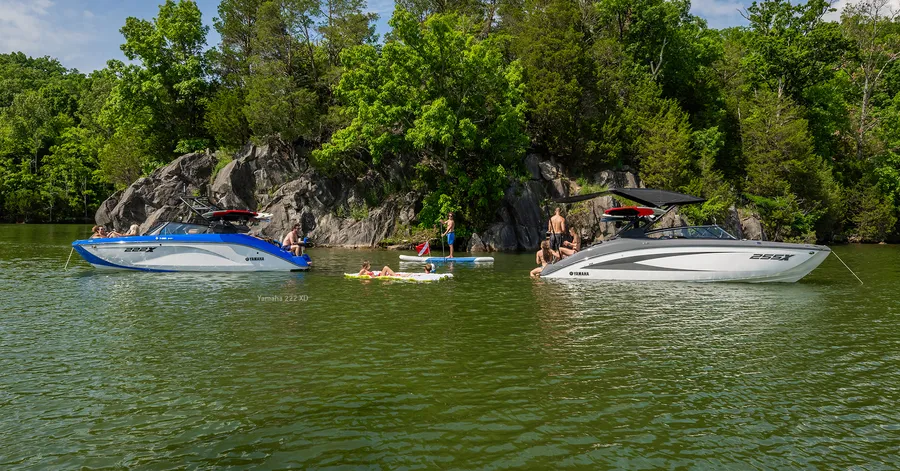
Evaluating a premium watercraft across Southeast Texas's distinct regional waterways—whether preparing to launch into the high-density holiday channels of Lake Conroe, navigating the river networks of Beaumont, or charting complex tidal runs out of Clear Lake—demands strict operational competence and a defensive piloting posture during major holiday weekends. Memorial Day weekend represents the official peak of the summer boating season, introducing compressed traffic corridors, variable wake dynamics, and mixed operator experience levels to localized basins.
Implementing a structured risk-mitigation strategy and verifying your mechanical grounding metrics before reaching the launch lane is your primary line of defense against on-water liabilities, automated engine guardian modes, and emergency scenarios in crowded coves.
1. The Holiday Operational Matrix: Crowded Water Realities
Holiday weekend environments generate distinct fluid dynamics and traffic patterns that differ fundamentally from standard weekday cruising.
- Managing High-Density Traffic Fields: Expect a significant increase in active vessels sharing narrow channels and open-water staging areas. This congestion naturally multiplies the volume of inexperienced operators on the water, requiring you to maintain an active, 360-degree visual scan and treat surrounding platforms with an extra layer of defensive cushion.
- Isolating Submerged Debris and Structural Wake Swells: High hull counts tracking back-to-back amplify shore erosion, pulling floating timber, branches, and loose debris into the navigation tracks. Furthermore, continuous cross-cutting hulls generate chaotic, intersecting "surprise wakes" and rolling displacement swells that bounce off bulkhead walls and coves, demanding proactive throttle management to stabilize your running attitude.
2. Mandatory Pre-Launch Systems Validation
Before trailing your vessel into a high-density holiday launch lane, perform a rigorous mechanical and electrical audit at the dock or staging area to ensure complete hardware continuity.
- Low-Voltage and Auxiliary Component Tests: Verify that your battery banks display optimal starting voltage under load. Actively test your automated bilge pump float switches, engine compartment blowers, navigation lighting arrays, and pneumatic signaling horns to ensure compliance with federal safety mandates.
- Propeller and Running Gear Diagnostics: Inspect the physical edges of your propeller blades for subtle gouges, stress distortions, or micro-dings. A slightly out-of-round blade pitch might feel negligible at idle speed, but under high-load holiday cruising, it generates severe harmonic vibrations that can accelerate seal failures inside the lower unit gearcase.
3. On-Water Risk Reduction and Anchoring Staging
Defensive pilotage in high-density corridors shifts your focus from aggressive cruising to proactive spacing, tracking isolation, and spatial awareness.
- Establish Wide Separation Basins: Provide an expansive tracking cushion around active tow boats, wakeboard platforms, and wakesurf hulls. A vessel actively pulling a rider requires massive trailing space and possesses limited maneuverability; keeping your distance prevents close-quarters avoidance maneuvers.
- Enforce Strict Lookout Disciplines: When staging swimming sets, anchoring in coves, or tracking near low-freeboard platforms, designate a dedicated adult lookout whose sole responsibility is to monitor water entries, swimmer positions, and trailing rope lines. Keep helm entertainment systems at a volume that allows you to hear external acoustic signals or verbal commands.
- Calculate True Anchoring Scope Parameters: When anchoring in crowded holiday coves, calculate a proper scope ratio (ideally a minimum 5:1 length-to-depth ratio using a proper chain lead) to secure your ground tackle. Never crowd the natural swing radius of adjacent vessels; factor in wind shifts and tidal drift currents to prevent localized hull-to-hull contact.
4. Strategic Staging: The Return-to-Ramp Protocol
The worst operational friction of a holiday weekend typically occurs at the concrete launch lane when hundreds of vessels attempt to exit the water column simultaneously at sunset.
- Execute Asynchronous Staging Routines: Beating the holiday ramp rush is a matter of timing. Proactively plan your exit vector by returning to the marina slips slightly ahead of the afternoon surge. Alternatively, anchor in a secure, low-traffic perimeter and wait out the mass evacuation line entirely, maximizing your relaxed hours on the water and minimizing close-quarters trailering stress.
Technical Frequently Asked Questions
What is the legal speed restriction for operating a watercraft after dark in Texas waters? While open public reservoirs do not feature posted speed limits during peak daylight windows, Texas maritime law enforces a strict 25 MPH speed limit at night (defined from 30 minutes after sunset to 30 minutes before sunrise). This regulation is vital because ambient shoreline lights easily blend with structural vessel lighting after dark, making it exceptionally difficult to judge tracking velocities, closing distances, and floating hazards.
Why is running the engine bilge blower mandatory before launching or starting an inboard vessel? Fuel vapors are heavier than atmospheric air and will naturally settle into the lowest quadrants of a sealed engine compartment or bilge space. Texas maritime regulations mandate running your engine bilge blowers for a minimum of four continuous minutes prior to starting the engine or turning on electrical systems. This process evacuates any trapped combustible vapors out of the hull, eliminating the risk of a catastrophic static spark explosion inside the engine bay.
Sourcing Authorized Marine Assets & Technical Upkeep
Safeguarding your vessel through variable seasonal conditions requires outfitting your platform with components and mechanical structures calibrated to exact manufacturer tolerances.
- Comprehensive New and Pre-Owned Showrooms: To evaluate rough-water hull geometries, test luxury trim lines, or compare the tracking profiles of elite regional brands, explore our complete regional inventories of New Boats and strictly certified Used Boats.
- Advanced Transom Repower Operations: If your existing power plant exhibits low-end throttle lag or lacks modern digital networks near the courtesy docks, outfitting your transom through our specialized Repower Mercury or Repower Yamaha hubs installs advanced control systems for absolute handling precision.
- Certified Multi-Point Systems Maintenance: From testing low-voltage battery capacities under load to replacing raw-water pump impellers or diagnosing hydraulic steering binding, trust our factory-trained technicians at the Texas Marine Service Center department. For do-it-yourself maintenance, our Parts Center supplies factory-direct filters, zinc anodes, and marine accessories.
Fleet Allocation and Financial Coordination
What structural consumer credit frameworks exist for premium vessel procurement? Our internal Financing office constructs customized consumer portfolios, allowing buyers to seamlessly bundle their high-performance hull selection, reliable outboards, technical navigation electronics, and comprehensive Marine Insurance protections into a single structured loan.
Can I leverage my current boat's equity to transition to a modern rough-water platform? Yes. We facilitate transparent, market-accurate asset evaluations to eliminate personal listing delays. To liquidate your old hull and apply its equity directly toward an upgrade, submit your vessel's technical specifications to our Sell / Trade department.
How do I track upcoming dealer events or connect with Texas Marine? To learn about our 45-year legacy serving Southeast Texas mariners, visit our About Us page. You can monitor our active schedule of safe-boating seminars, captain safety workshops, and regional boat shows on our Events page, track continuous technical maintenance guides on our Blog section, see verified customer feedback on our Reviews directory, or connect directly with our specialized team members via our Staff index. To review extended service coverages, check our Extended Service Contracts checklist, and find current promotions on our Specials page. Experience these performance traits firsthand and evaluate various configurations across real-world water conditions by planning your attendance around our scheduled Demo Day events.